
Introduction
The diamond clarity chart is an essential guide used in the jewelry industry to evaluate the internal and external characteristics of diamonds. Clarity refers to the presence of inclusions and blemishes that naturally occur during a diamond’s formation. Understanding the clarity chart helps buyers determine a diamond’s quality and overall appearance before making a purchase.
When people shop for diamonds, they often encounter grading terms such as FL, IF, VVS, VS, SI, and I. These terms come from the standardized diamond clarity scale used by gemological organizations. Learning how the diamond clarity chart works allows buyers to choose diamonds that offer the best balance between beauty, quality, and value.
What Is Diamond Clarity?
Diamond clarity refers to the number, size, and visibility of internal imperfections known as inclusions, as well as surface flaws called blemishes. These characteristics occur naturally during the formation of diamonds deep within the Earth’s crust. Every diamond is unique, and clarity grading helps determine how noticeable these features are under magnification.
Experts evaluate diamonds using a 10× magnification standard, which allows gemologists to carefully inspect imperfections. The fewer visible inclusions a diamond has, the higher its clarity grade will be. Higher clarity diamonds are rarer and therefore often more expensive in the jewelry market.
Diamond Clarity Chart Explained
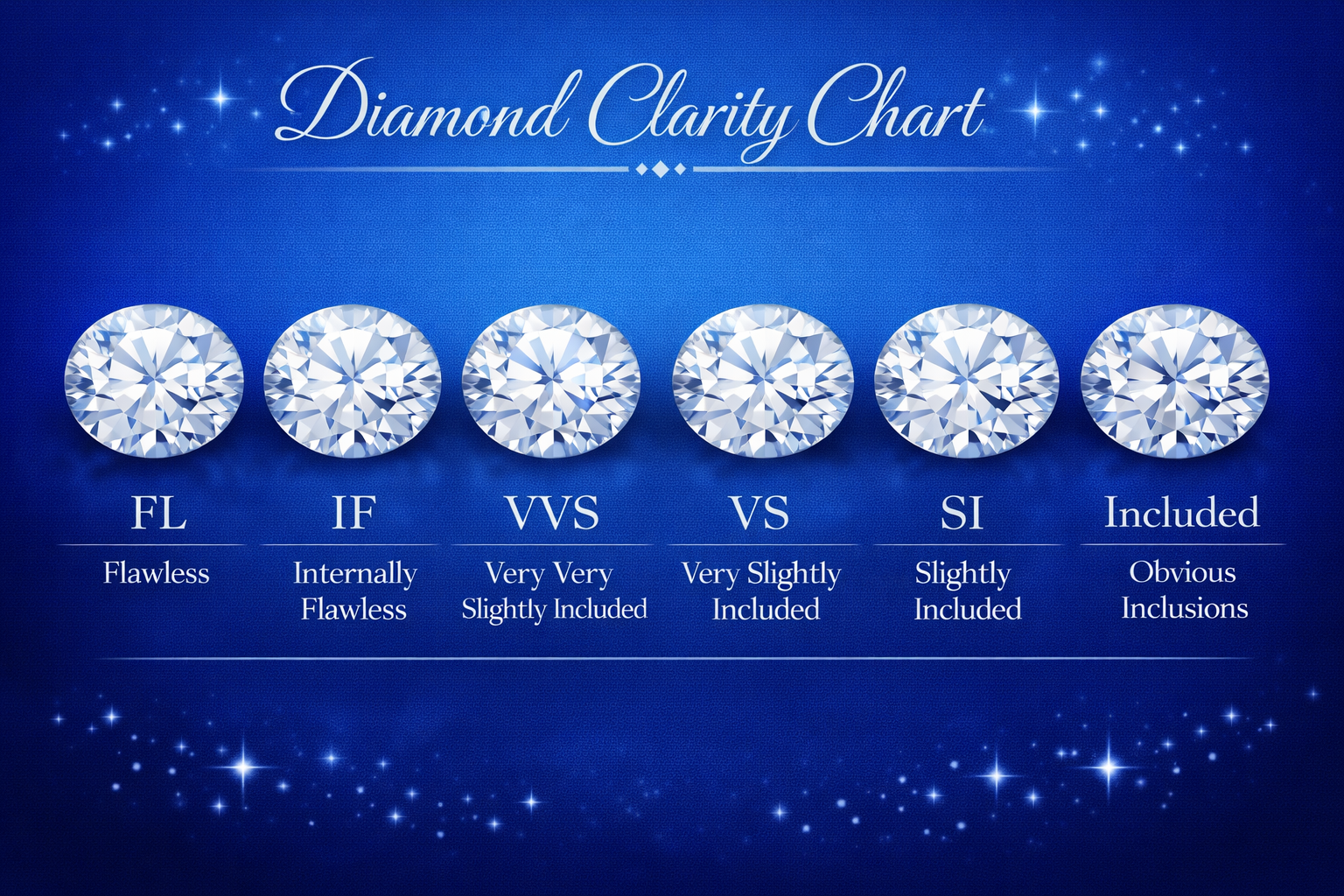
The diamond clarity chart categorizes diamonds into several grades based on the visibility of inclusions and blemishes. These grades provide a standardized way to compare diamonds and understand their quality. The clarity chart is widely used by jewelers, gemologists, and consumers when evaluating diamonds.
| Clarity Grade | Description |
| FL | Flawless – no inclusions or blemishes visible |
| IF | Internally Flawless – no internal inclusions |
| VVS1 / VVS2 | Very very small inclusions |
| VS1 / VS2 | Very small inclusions |
| SI1 / SI2 | Noticeable inclusions under magnification |
| I1 / I2 / I3 | Inclusions visible to the naked eye |
Each category in the clarity chart represents a different level of diamond purity and rarity.
Diamond Clarity Grades in Detail
Each clarity grade describes the visibility and location of inclusions in a diamond. Understanding these grades helps buyers determine which diamonds offer the best visual quality without exceeding their budget.
Common Diamond Clarity Grades
- FL (Flawless): No visible inclusions or blemishes under magnification.
- IF (Internally Flawless): No internal flaws but may have minor surface marks.
- VVS1 / VVS2: Extremely small inclusions that are difficult to see even under magnification.
- VS1 / VS2: Minor inclusions visible under 10× magnification.
- SI1 / SI2: Slight inclusions that may be noticeable with careful inspection.
- I1 / I2 / I3: Inclusions visible to the naked eye.
These categories help determine a diamond’s overall quality and market value.
What Are Diamond Inclusions?
Inclusions are internal imperfections found inside a diamond. These imperfections form naturally during the crystal growth process and can appear in different shapes or patterns. Some inclusions may be microscopic, while others can be visible without magnification.
Common types of diamond inclusions include:
- Feathers – small cracks within the diamond
- Crystals – tiny mineral particles trapped inside
- Clouds – clusters of microscopic inclusions
- Pinpoints – extremely small dots within the stone
- Needles – thin, elongated inclusions
Gemologists carefully analyze these features when determining a diamond’s clarity grade.
Diamond Blemishes and Surface Imperfections
Blemishes are surface imperfections that occur on the outside of a diamond rather than inside the stone. These marks may develop during the cutting and polishing process. While blemishes typically have less impact than internal inclusions, they still influence clarity grading.
Examples of diamond blemishes include:
- Polish lines created during finishing
- Scratches on the diamond surface
Natural marks left during cutting - Extra facets added by the cutter
- Surface pits that appear as tiny openings
Although blemishes can affect clarity grading, they are often less noticeable than internal inclusions.
Diamond Clarity and the 4Cs of Diamonds
Clarity is one of the famous 4Cs of diamond quality, which include clarity, cut, color, and carat weight. These four factors work together to determine a diamond’s beauty, brilliance, and value in the jewelry market.
Clarity focuses specifically on the internal purity of the diamond. However, many experts believe that cut quality often has a greater effect on a diamond’s sparkle. Buyers should consider all four factors together rather than focusing on clarity alone when choosing a diamond.
Best Diamond Clarity for Buying
When purchasing a diamond, the highest clarity grade is not always necessary. Many diamonds with VS or SI clarity grades appear flawless to the naked eye. Choosing these grades can provide excellent value while maintaining beautiful visual quality.
Recommended Clarity Choices
- VS1 / VS2: High clarity with minimal visible inclusions
- SI1: Often appears clean without magnification
- VVS1 / VVS2: Premium quality for luxury diamonds
- FL / IF: Rare and extremely expensive diamonds
Selecting the right clarity grade depends on personal preference and budget.
How the Diamond Clarity Chart Affects Price
Diamond clarity has a significant influence on the price of a diamond. Stones with fewer inclusions are rarer and therefore more valuable in the market. For example, a flawless diamond can cost significantly more than a diamond with small inclusions.
However, many buyers choose diamonds with slightly lower clarity grades because they still appear visually flawless. This approach allows consumers to invest more in other factors such as cut quality or carat size while maintaining excellent overall appearance.
Tips for Choosing the Right Diamond Clarity
Selecting the right diamond clarity requires understanding both visual quality and budget considerations. Buyers should evaluate diamonds carefully and consider how inclusions affect the overall appearance of the stone.
Helpful Diamond Buying Tips
- Always examine diamonds under proper lighting.
- Choose eye-clean diamonds that appear flawless without magnification.
- Focus on cut quality for maximum sparkle.
- Compare multiple diamonds before purchasing.
- Purchase diamonds with certification from trusted labs such as GIA.
These strategies help buyers select diamonds that offer both beauty and value.
Conclusion
The diamond clarity chart is an essential tool for understanding the quality and purity of diamonds. By categorizing diamonds based on inclusions and blemishes, the clarity chart allows buyers to compare different stones and make informed purchasing decisions.
Although flawless diamonds are rare and valuable, many diamonds with slightly lower clarity grades still offer exceptional beauty. By understanding the diamond clarity scale and the role of inclusions, buyers can confidently choose diamonds that match their preferences, budget, and style.
FAQs
What is a diamond clarity chart?
A diamond clarity chart is a grading system used to classify diamonds based on the visibility of inclusions and surface blemishes.
Which diamond clarity grade is the best?
FL (Flawless) is the highest clarity grade because it has no visible inclusions or blemishes under magnification.
What does VS clarity mean in diamonds?
VS stands for “Very Slightly Included,” meaning the diamond contains small inclusions visible only under magnification.
Are SI clarity diamonds good quality?
Yes, many SI diamonds appear clean to the naked eye and offer excellent value for buyers.
Why does diamond clarity affect price?
Diamonds with fewer inclusions are rarer and therefore more valuable, which increases their market price.